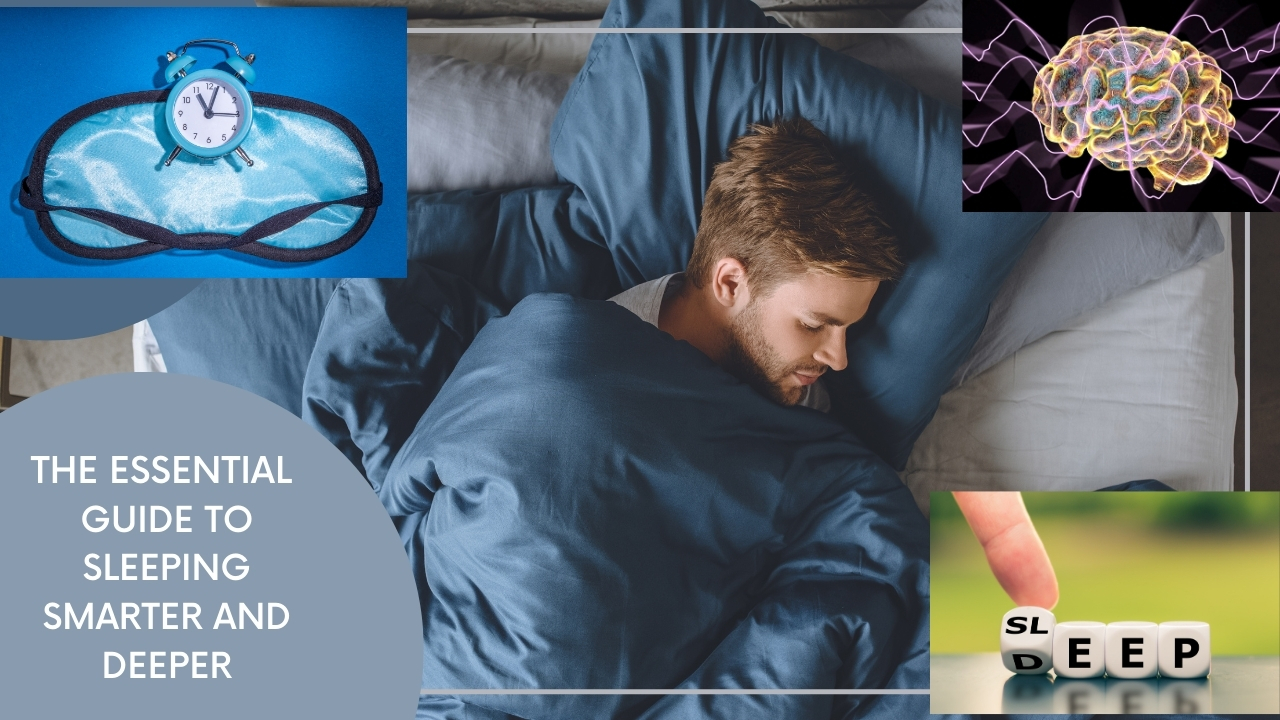
The Essential Guide to Sleeping Smarter and Deeper (Tonight)
You will spend nearly one-third of your life asleep — roughly 26 years for the average human. Understanding sleep helps you improve its quality starting tonight.
Part One: What Exactly is Sleep?
Sleep is the body's natural reset button. The brain and body cycle through distinct stages about every 90 minutes.
The Sleep Cycle
-
Stage 1 – Light Sleep: The gateway to slumber; lasts a few minutes as you relax.
-
Stage 2 – Transition Stage: Body temperature drops, heartbeat slows; ~50% of total sleep.
-
Stages 3 & 4 – Deep Sleep: Slow-wave sleep for tissue repair, immune boosts, energy restoration.
-
REM Sleep – Dream Stage: Brain activity like wakefulness; crucial for memory, creativity, and emotional processing.
Circadian Rhythm & Sleep Pressure
Two systems control sleepiness:
Circadian Rhythm: 24-hour internal clock influenced by light, temperature, and social cues.
Adenosine Build-up: Chemical that creates "sleep pressure"; caffeine blocks it temporarily.
Brain Architecture for Sleep
SCN (Suprachiasmatic Nucleus): Master clock.
Pineal Gland: Releases melatonin.
Thalamus: Filters external signals.
Pons & Medulla: Control REM and basic life functions.
Hippocampus & Cortex: Memory processing and consolidation.
Part Two: Why Sleep Matters
Sleep underpins mental, emotional, and physical health.
Memory & Learning: Transfers short-term to long-term memory.
Skill & Muscle Memory: Fine-tunes motor skills during sleep.
Creativity: REM connects distant ideas and fosters insight.
Emotional Balance: Regulates mood and calms emotional centers.
Sleep Deprivation: Effects
Short-term grogginess aside, chronic poor sleep harms brain and body:
Brain: Impaired concentration, microsleeps, emotional volatility, higher Alzheimer’s risk.
Body: Increased heart disease, stroke, metabolic issues, weakened immunity, hormonal disruption.
Part Three: The Science of Dreams
Dreams (mainly during REM) help with emotional processing, social understanding, and creativity.
Part Four: Common Sleep Disorders
Insomnia — difficulty falling or staying asleep.
Sleep Apnea — breathing pauses causing awakenings.
Narcolepsy — sudden sleep attacks.
Sleepwalking — activity during NREM sleep.
Restless Leg Syndrome — uncomfortable leg sensations disturbing sleep.
Part Five: How to Sleep Better — Tonight
Keep a Consistent Schedule: Same bedtime and wake time daily, even weekends.
Control Light: Get morning sunlight; avoid bright screens 1–2 hours before bed.
Create a Sleep-Friendly Environment: Dark, cool, and quiet bedroom.
Limit Stimulants: Avoid caffeine and nicotine in the evening.
Exercise Regularly: But avoid intense late-night workouts.
Relax Before Bed: Meditation, deep breathing, or reading — not scrolling.
Use Bed Only for Sleep: Don’t work or watch TV in bed.
Avoid Alcohol as a Sleep Aid: It disrupts REM even if it helps you fall asleep.
Conclusion
Sleep is a necessity — not a luxury. Respect your sleep cycles and circadian rhythm, apply the tips above, and you can dramatically improve your rest starting tonight.